Nunes da Fonseca Lab at Genética 2026 in Florianópolis
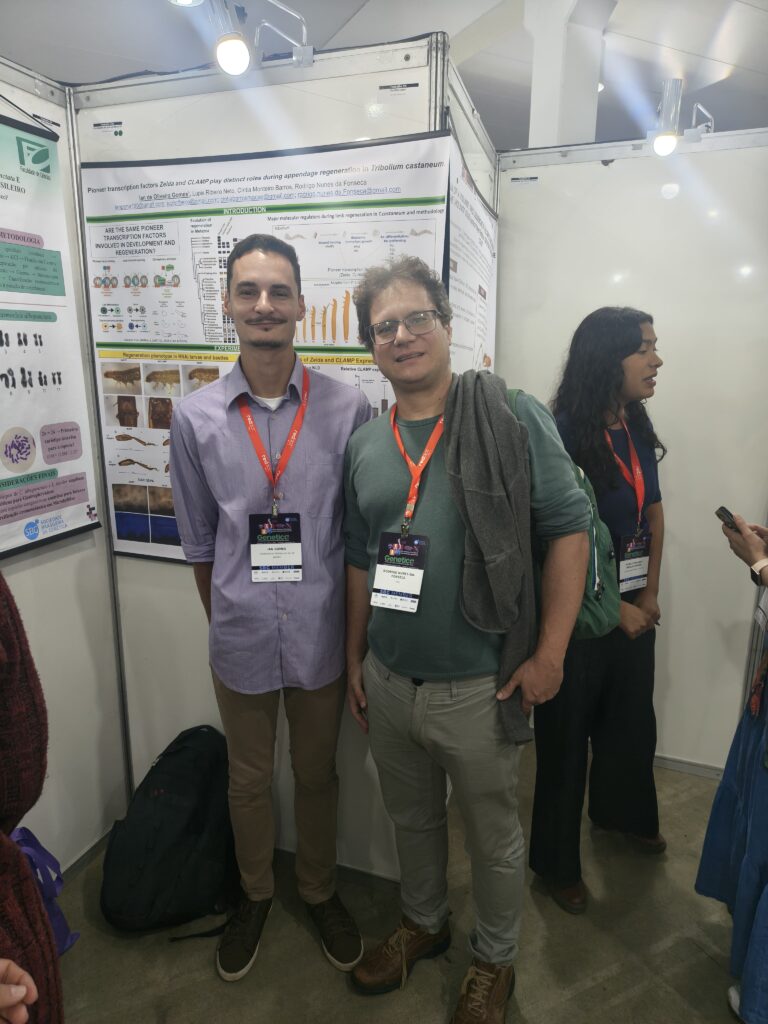
The Nunes da Fonseca Lab/NUPEM-UFRJ participated in Genética 2026, held in Florianópolis, Brazil, with a program highlighting several topics at the core of our research: de novo gene evolution, Evo-Devo, functional genomics, and small open reading frames (sORFs).
One of the highlights was the plenary lecture by Nikolaos Vakirlis, from the Hellenic Pasteur Institute, Athens, Greece, entitled “De novo gene evolution: from zero to hero?”, held on October 1 and chaired by Rodrigo Nunes da Fonseca. The lecture explored how new genes can emerge from previously non-coding genomic regions and how these sequences acquire biological functions during evolution — one of the most fascinating questions in modern evolutionary genomics.
Later that day, we participated in the symposium “From gene to genomics: regulatory innovation in emerging Evo-Devo model organisms”, bringing together different perspectives on how emerging model systems can expand our understanding of developmental evolution.
Patricia N. Schneider presented her work on the mechanisms underlying visual perception and evolutionary novelty in the four-eyed fish Anableps anableps. Bruno Cossermelli Vellutini discussed how genetics and tissue mechanics can be integrated to understand the evolution of development. Rodrigo Nunes da Fonseca presented “Bridging ecology, development, and genomics in novel arthropod models”, highlighting how ecology, developmental biology, and genomic technologies can be combined to investigate evolutionary questions in emerging arthropod models.
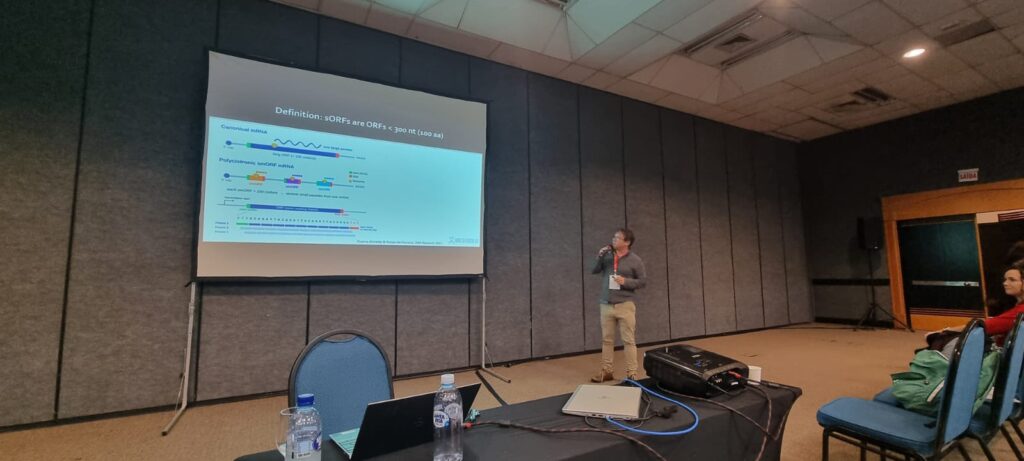
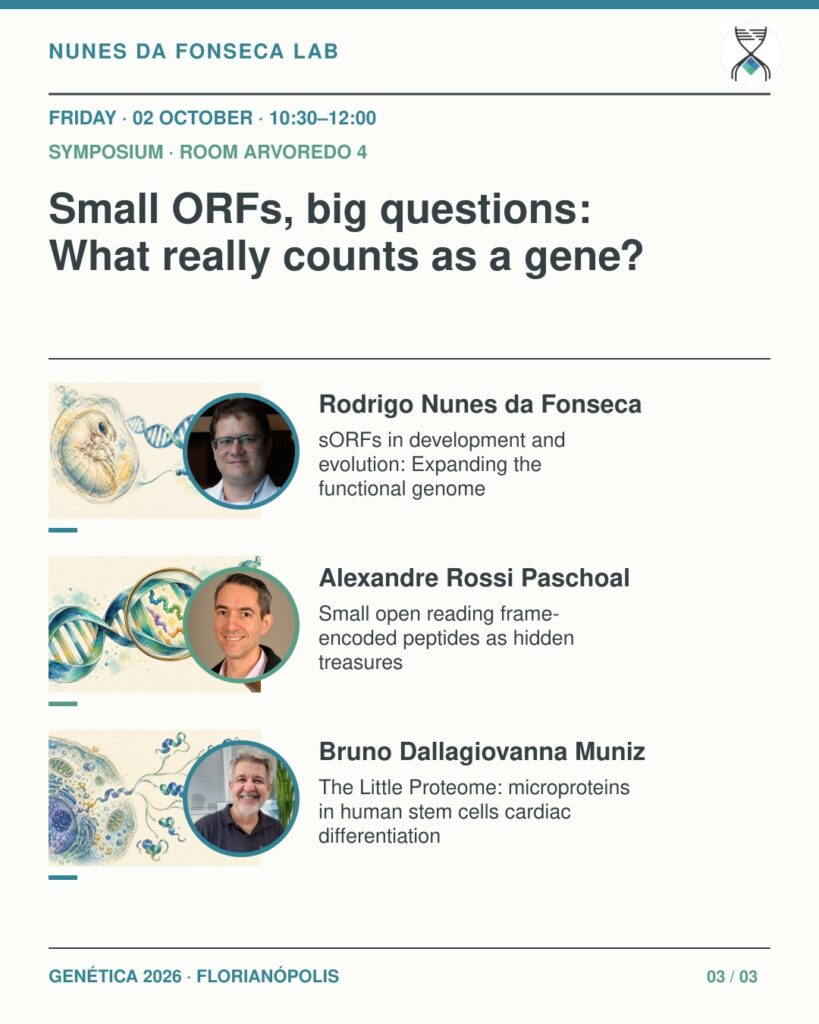
On October 2, the lab also participated in the symposium “Small ORFs, big questions: What really counts as a gene?”, focusing on the still largely unexplored world of small ORFs and microproteins.
During this session, Rodrigo Nunes da Fonseca presented “sORFs in development and evolution: Expanding the functional genome”, discussing the contribution of small ORFs to development and evolution and research from our group using model and emerging model organisms. Alexandre Rossi Paschoal explored small open reading frame-encoded peptides as hidden components of the proteome, while Bruno Dallagiovanna Muniz presented the role of microproteins during human stem cell cardiac differentiation.
Our participation in Genética 2026 reinforced an idea that drives much of our research: there is still a great deal of the genome, development, and evolution waiting to be discovered. Combining emerging model organisms, functional genomics, developmental biology, and evolutionary approaches provides an exciting path toward finding both new questions and new answers.
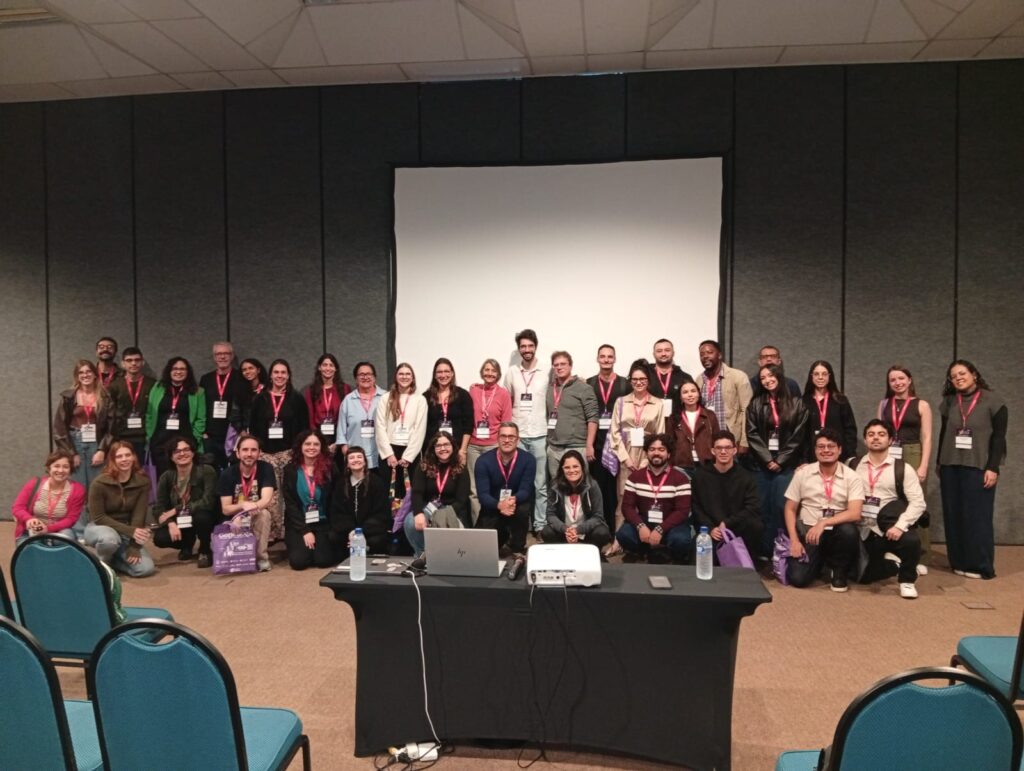
We thank the Genética 2026 organizers, speakers, collaborators, students, and everyone who joined the discussions in Florianópolis.
Nunes da Fonseca Lab – NUPEM/UFRJ
Evolution • Development • Genomics • Biodiversity